
Applying for a Resona credit card online is now more accessible than ever, whether you read English or Japanese.
This guide is crafted for residents, expats, and anyone interested in Japanese credit cards, offering key insights to streamline your application experience and maximize your chances of approval.



If you sometimes find online forms a bit daunting perhaps language barriers or complex terms have held you back this practical introduction should make the process feel much more achievable.
Why Choose a Resona Credit Card?
Resona Bank is one of Japan’s most prominent financial institutions. Their credit cards are accepted widely across stores, online shops, and even transit.
For those living in Japan or considering a move, having a Japanese credit card can make daily life more convenient.
Some people just want to shop online securely, while others might be seeking to build local credit history or earn reward points. It depends on your needs, really.
Benefits of Applying Online
There are several advantages to using Resona Bank’s online application process. Not only does it save time, but it’s also straightforward compared to filling out paper forms at a branch.
You can take your time and avoid crowded banking hours. Digital applications often allow you to review information in both English and Japanese, which can be reassuring if you feel nervous about missing important details.

Main Requirements for Application
Before you start the online application, it’s important to ensure you meet the basic eligibility criteria. While requirements can change, these are generally consistent:
- Be at least 18 years old (sometimes 20, depending on the credit card type)
- Have a valid photo identification (passport, residence card, or Japanese driver’s license)
- Hold a stable income or a recognized job (students may need a guarantor)
- Possess a Japanese address for card delivery
Perhaps the work status requirement causes the most concern for some. If you’re unsure, contacting customer service can clarify it.
Choosing the Right Resona Credit Card
Resona offers several types of cards, each tailored to different lifestyles:
- Resona VISA/MasterCard/JCB Standard: Basic cards, widely accepted, ideal for new customers
- Resona Gold Card: Higher credit limits, travel and shopping rewards
- Resona Platinum Card: Premium perks, exclusive benefits for frequent travelers
Some people might be attracted by premium cards, but starting with a standard one may increase your approval chances if you’re new to Japanese credit. Think about what fits your current needs before aiming higher.
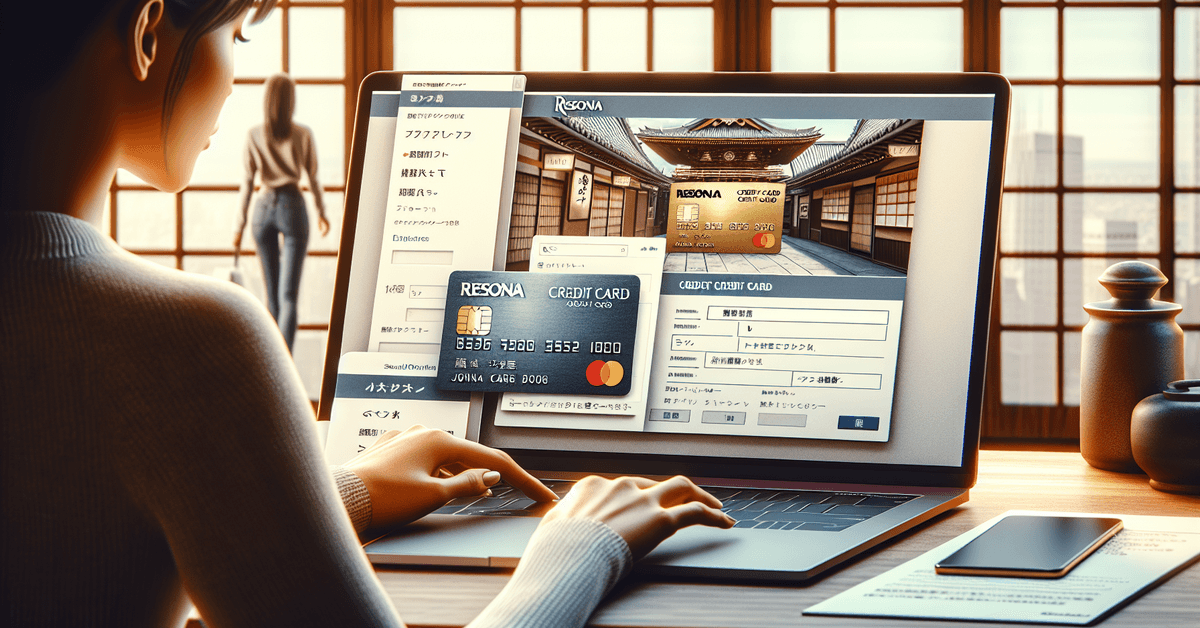
How to Apply for a Resona Credit Card Online
The application process is generally user-friendly, although there might be moments when you hesitate over what information to include. Here’s a natural breakdown.
Step 1: Visit Resona’s Official Website
Access the official Resona Bank website. Find the Credit Card section. Most main pages allow language switching between English and Japanese, though secondary pages might remain Japanese-only.
Having a browser translation tool, such as Google Translate, can be helpful.
Step 2: Select Your Preferred Card Type
Take a look at the various credit card options available. Consider the annual fees, point systems, and associated benefits.
The website may show a comparative chart. If they don’t, here’s a simple version you might use for decision-making:
| Card Type | Annual Fee | Main Features |
|---|---|---|
| Standard | ¥1,375 (may be free 1st year) | Basic points, universal acceptance |
| Gold | ¥11,000 | Higher limits, insurance, more points |
| Platinum | ¥22,000 | Luxury rewards, airport lounge access |
Step 3: Complete the Online Application Form
You’ll be asked to provide basic personal information—name, address, date of birth, and contact details.
You may need to choose a preferred payment account, which can simplify your monthly repayments later. If unsure about a particular question, you might leave it blank and revisit it after reading the FAQ or using a browser translator.
Step 4: Prepare and Upload Identification
Identification is key. Usually, a color scan or smartphone photo of your residence card and passport suffices.
For some advanced cards, income verification may be required (like recent payslips or tax documents).
The upload process is mostly straightforward but can feel clunky on mobile. If files are too large, resizing them beforehand can save hassle.
Step 5: Confirmation and Review
After completing all fields, the site will typically show a confirmation page. Review every detail for errors.
Typos, especially in names or numbers, often delay approval. Double-checking your address seems tedious but it’s worth it—mistakes can mean the card gets lost or returned.
Step 6: Submit and Wait for Follow-Up
Once submitted, the bank reviews your application. Processing times range from a few days to a week, sometimes longer during peak periods.
If additional documents are needed, you’ll receive an email or telephone call, generally in Japanese but sometimes with English support upon request.
Step 7: Receive and Activate Your Card
Upon approval, your card is mailed to your registered address, usually within one to two weeks.
After receiving it, you’ll set a PIN and activate it either online or by phone.
Some people get anxious if mail is delayed, but if the timeline stretches past two weeks, contacting Resona support can provide peace of mind. Make sure to check your junk mail for important emails.
Tips for a Smooth Application
Keep digital copies of all submitted documents for easy reference.
- If you struggle with Japanese, ask a friend for help or use browser translation intelligently—in my experience, forms often use predictable formats.
- Double-check that your personal information matches exactly across all documents to avoid confusion.
- Check your device’s internet connection before starting, so you won’t be interrupted mid-application.
- Gather employment or income proof in advance if applying for higher-end cards.
Frequent Questions and Common Issues
A few uncertainties often crop up when foreigners or residents new to Japan apply online for credit cards:
- Can I apply in English? Some application screens are partially in English, but official documentation will be in Japanese. Google Translate provides workable support if hesitant.
- Will my foreign ID work? A Japanese residence card is essential. Relying on a passport alone generally isn’t enough for credit approval.
- Can students apply? Yes, but a guarantor may be required. This can sometimes slow down the process, but it’s manageable if you prepare in advance.
Legal and Privacy Considerations
Resona, as a major Japanese bank, complies with strict data privacy and anti-fraud laws.
- Personal information is encrypted and managed securely.
- Always use the official website to avoid third-party links when starting your application.
- Never share your application credentials with anyone you don’t trust.
If you are privacy-conscious, reviewing the Resona privacy policy can clarify concerns.
Conclusion
Applying for a Resona credit card online might seem complex at first, but with patience and the right information, it’s perfectly manageable.
Whether you’re establishing yourself in Japan or simply seeking more financial freedom, the online process aims to be accessible.
If you’re interested in other flexible financial options, you might want to explore more about choosing credit cards for expats or students in Japan. Taking the first step can feel uncertain, but sometimes, you just find it far easier than expected.
Explore other guides on our blog for easy comparisons and additional tips to make life in Japan simpler and more rewarding.